Every entrepreneur knows that running a small business isn’t just about having a dream and working hard. It’s about protecting that dream from the unpredictable bumps in the road that life throws your way. Enter small business insurance—your business’s safety net when things go awry.
Understanding which types of insurance your small business needs can be the difference between weathering a storm and getting swept away by it. In this guide, we’ll break down the essential insurances every small business should consider, so you can keep your peace of mind while focusing on growing your empire.
Understanding Small Business Insurance
Did you know that 40% of small businesses never reopen after a disaster? That’s a staggering number. This is where small business insurance comes in.
Insurance isn’t just a safety net; it’s a lifeline. For entrepreneurs, it’s the difference between bouncing back from a setback or closing up shop permanently. Let’s dive into the various types and why they matter.
Types of Small Business Insurance
There are several types of insurance policies that can protect your business. Here’s a breakdown:
- General Liability Insurance: Covers accidents and injuries on your business premises.
- Professional Liability Insurance: Protects against claims of negligence or malpractice.
- Property Insurance: Safeguards your business assets against theft and damage.
- Workers’ Compensation Insurance: Provides for employees’ medical costs and lost wages from work-related injuries.
- Business Interruption Insurance: Covers the loss of income during unexpected events that halt your business operations.
Pro Tip: Always assess your business’s specific risks to decide which insurance policies are essential.
Insurance as a Risk Management Tool
Small businesses face a myriad of risks every day. Without insurance, a single accident could be catastrophic. Insurance shifts the financial burden away from you, allowing you to focus on growth.
Here’s the deal: it’s not just about protecting against obvious risks. It’s about safeguarding your future. With the right coverage, you can handle unexpected events with confidence, knowing your business is secure.
Comparison of Small Business Insurance Policies
Understanding the features of different policies is crucial. Here’s a quick comparison:
| Insurance Type | Coverage Highlights | Ideal For |
|---|---|---|
| General Liability | Third-party bodily injury, property damage | All businesses |
| Professional Liability | Errors and omissions | Service providers |
| Property Insurance | Theft, fire, natural disasters | Businesses with physical assets |
| Workers’ Compensation | Employee injuries | Businesses with employees |
| Business Interruption | Lost income, operating expenses | Businesses prone to disruptions |
Types of Insurance for Small Businesses
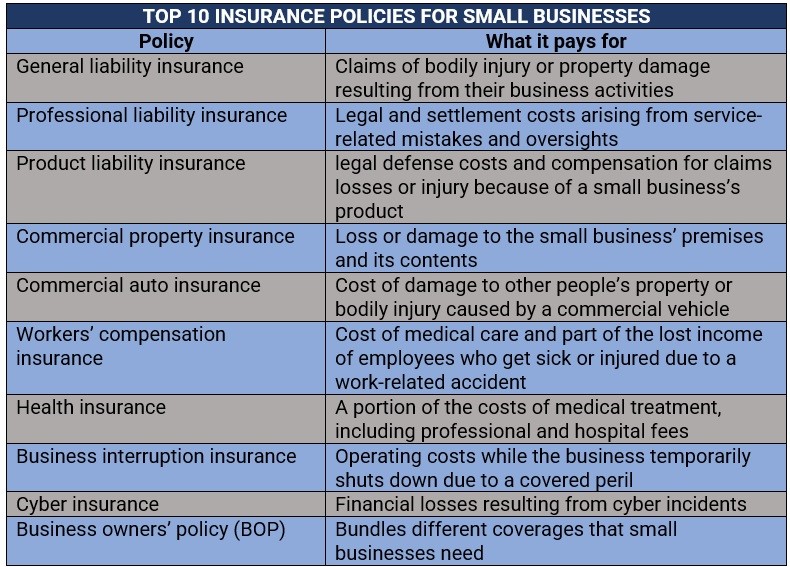
Did you know that 40% of small businesses will experience a property or liability loss in the next 10 years? That’s a huge risk many entrepreneurs overlook. But fear not! With the right insurance, you can protect your small business from devastating losses.
Understanding the different types of insurance is key. Not every insurance policy suits every business, so it’s crucial to know what coverage you need. Here is the deal: we’ll explore three essential insurance types that every small business should consider.
General Liability Insurance
General Liability Insurance is the backbone of any business insurance plan. It covers claims of bodily injury or property damage that occur on your business premises or as a result of your business operations. Suppose a customer slips and falls in your store. This insurance will cover medical expenses and legal fees if a lawsuit follows.
- Customer injury on premises
- Damage to customer property
- Advertising injury
General Liability Insurance is essential for protecting your business from everyday accidents and oversights.
Professional Liability Insurance
Do you offer professional services or advice? Then you need Professional Liability Insurance, also known as Errors and Omissions Insurance. It protects you against claims of negligence or inadequate work. Imagine you’re a consultant, and a client claims your advice led to financial loss. This insurance will handle the legal costs and damages.
- Errors in professional services
- Failure to deliver promised results
- Misrepresentation claims
Professional Liability Insurance safeguards businesses against costly mistakes and misunderstandings in professional services.
Commercial Property Insurance
Imagine a fire destroys your office. How would you rebuild? Commercial Property Insurance covers the cost of repairing or replacing your business assets, including buildings and personal property. It’s a lifesaver if you rely heavily on physical assets to operate.
- Fire or smoke damage
- Theft of business property
- Weather-related damage
Commercial Property Insurance ensures your business can recover from physical damage or loss of assets.
Cost Factors of Small Business Insurance

Ever wondered why some small businesses pay more for insurance than others? It’s not just luck. Several factors influence the cost of your small business insurance. Let’s break it down.
Insurance premiums aren’t a one-size-fits-all deal. What you pay depends on a variety of elements like business size, industry, and even your claims history. Understanding these factors can help you save big time.
Key Factors Influencing Insurance Costs
Here is the deal: knowing what affects your insurance premiums can give you a leg up. Let’s look at a few key factors:
| Factor | Description | Example |
|---|---|---|
| Business Size | Larger businesses typically have higher insurance needs. | A company with 50 employees will often pay more than one with 5. |
| Industry Type | Riskier industries require more coverage. | Construction companies pay more than consulting firms. |
| Claims History | Frequent claims can increase premiums. | If you’ve filed multiple claims, expect higher costs. |
| Location | Some areas have higher risks like theft or natural disasters. | Businesses in flood zones might face higher premiums. |
Impact of Business Size and Industry on Premiums
Larger businesses naturally have more assets to protect, so they need more coverage. If you’re in a high-risk industry, insurers see you as a potential liability. But don’t panic. There are ways to manage these costs.
Strategies to Manage and Reduce Insurance Costs
Want to cut down on insurance expenses? Start with these strategies:
- Bundle different types of insurance for discounts.
- Implement risk management practices like employee training.
- Regularly review and update your coverage to avoid over-insuring.
Pro Tip: A clean claims history is your best friend for keeping premiums low.
Remember, you have the power to influence these costs. By understanding the factors at play, you can take actionable steps to manage what you pay for small business insurance.
Selecting the Right Insurance Provider
Choosing the right insurance provider can make or break your small business. Did you know that 40% of small businesses don’t have adequate insurance coverage?
But why leave your business vulnerable? Here’s the deal: Picking the right provider involves more than just comparing prices.
Evaluating Insurance Providers
Start by assessing their customer service. You need a provider who answers your calls promptly. They should handle claims efficiently because downtime costs you money. Look for reviews online, and don’t forget to ask your business network for recommendations.
Comparing Providers
It’s crucial to take stock of what different providers offer in terms of pricing and coverage. A provider might be cheap, but do they cover everything your business needs?
| Provider | Customer Service | Pricing | Coverage Options |
|---|---|---|---|
| Provider A | Excellent | Moderate | Comprehensive |
| Provider B | Good | Low | Standard |
Criteria for Selection
When choosing an insurance provider, consider these essential criteria:
- Financial stability
- Industry experience
- Customizable policies
- Customer satisfaction ratings
Pro Tip: Always check the financial health of an insurer. Use ratings from agencies like A.M. Best or Fitch.
Obtaining Quotes and Assessing Options
Now, enter the quoting phase. Obtain quotes from at least three providers to get a sense of the market. But don’t just look at the bottom line. Examine what each policy covers.
Request a detailed breakdown of coverage and exclusions. This is where many businesses slip up, and it can cost them dearly later when they try to make a claim.
Claims Process and Management
Did you know that 40% of small businesses will file an insurance claim within the next 10 years? Filing a claim might seem daunting, but it doesn’t have to be.
The claims process involves several crucial steps to ensure you receive the compensation you deserve. Let’s break it down.
Steps Involved in Filing a Small Business Insurance Claim
Here’s the deal: filing a claim isn’t just about picking up the phone. It’s a structured process.
- Notify your insurer immediately after an incident. Time is of the essence.
- Document everything. Take photos, gather witness statements, and write detailed accounts.
- Submit your claim with all necessary documentation.
- Follow up consistently. Keep communication lines open with your insurer.
- Review settlement and finalize the claim.
Typical Documentation Needed for a Claim
Before diving into the paperwork, let’s talk about what you need in hand. Accurate documentation is your best ally.
| Document Type | Description |
|---|---|
| Incident Report | Details of the event, including date, time, and location. |
| Photos and Videos | Visual documentation of damages or injuries. |
| Receipts and Invoices | Proof of expenses related to the claim incident. |
| Policy Documentation | Your insurance policy details and coverage information. |
Importance of Maintaining Accurate Records
Keeping precise records is not just a good practice—it’s essential. Why? Because accurate records speed up the claims process and minimize disputes.
Pro Tip: Digitize your records and back them up regularly. This saves time when you need to access them quickly.
Strong record-keeping provides a clear history of your business’s interactions and transactions, making it easier to validate claims.
Best Practices for Managing Claims
Managing claims efficiently is crucial for quick reimbursements. Here’s how you can do it right.
- Assign a dedicated team member to handle claims from start to finish.
- Regularly review your policy to ensure you understand coverage specifics.
- Stay organized with a claims management system.
- Communicate openly with your insurer and follow up on any pending queries.
By proactively managing your claims, you not only ensure timely reimbursements but also strengthen your relationship with your insurer.
Real-Life Case Studies and Testimonials
Ever wonder how small businesses survive unpredictable disasters? The answer is often found in one word: insurance. Let me share some real-life stories that illustrate the life-saving role of small business insurance.
Imagine waking up to the news that your store is flooded or your inventory is stolen. For many small businesses, these aren’t just nightmares but harsh realities. Insurance can be the hero in these stories, saving businesses from the brink of collapse. Let’s dive into how insurance turned these situations around.
Small Business Success Stories
Meet Sarah, the owner of a thriving bakery. When a fire broke out in her kitchen, you’d think she was toast. BUT her comprehensive business insurance policy had her covered. The insurance paid for repairs and replaced her damaged equipment. Within weeks, Sarah was back to serving her famous pastries.
Another example is Tom, who runs an IT consultancy. His office was robbed, and thousands of dollars worth of equipment were stolen. Thanks to his insurance policy, Tom was reimbursed quickly, allowing him to replace the equipment and get back to work with minimal disruption.
Pro Tip: Always review your insurance policy to ensure it covers the specific risks your business may face.
Testimonials from Business Owners
Don’t just take my word for it. Here are some testimonials from small business owners who’ve seen the benefits of insurance firsthand:
- “Insurance saved my business from shutting down after a devastating flood.” – Jane, Retail Store Owner
- “The claims process was surprisingly smooth, and I received my payout faster than expected.” – Mike, Restaurant Owner
- “I sleep easier knowing my business is protected from unexpected setbacks.” – Lisa, Salon Owner
Lessons Learned and Business Continuity
Insurance is not just a safety net; it’s a business continuity plan. These case studies prove that having the right insurance can mean the difference between closing doors and thriving after a crisis. Lesson learned? Don’t wait until disaster strikes. Analyze your risks and ensure your coverage matches your needs.
To sum it up, these stories and testimonials highlight a crucial insight: Insurance is essential for securing business longevity and resilience. Here is the deal: Without it, you’re leaving your business exposed to potential ruin.
Conclusion
Ultimately, the right small business insurance isn’t just a smart business move; it’s a necessity. Protecting assets, employees, and your hard-earned reputation is vital for long-term success. By understanding your insurance needs and choosing wisely, you’re investing in the resilience and continuity of your business. So, safeguard your small business today because tomorrow has its own set of adventures and challenges waiting for you.
FAQ
What are the three most common types of insurance for small businesses?
General liability insurance, property insurance, and workers’ compensation insurance are commonly needed to protect small businesses from various risks.
How does business size affect insurance costs?
Larger businesses typically face higher premiums due to increased coverage needs and higher risk levels.
Why is general liability insurance important?
It covers legal fees and damages if you are sued for injury or property damage caused by your business operations.
Can insurance help in risk management for small businesses?
Absolutely! Insurance mitigates financial risks by covering unexpected events, allowing businesses to recover more easily.
What factors influence the cost of small business insurance?
Industry type, business size, location, and claims history all play significant roles in determining insurance premiums.
