Understanding Errors and Omissions Insurance in Washington State: Your Essential Guide

Errors and omissions insurance, or E&O insurance, might just be the unsung hero for professionals and businesses in Washington State. Picture this: you’re running a successful business, and suddenly, a client claims that an error in your service has cost them a significant loss. Without a safety net like E&O insurance, this could spell financial disaster. But, fear not! With the right policy, you’re shielded from such unexpected claims.
This guide unravels the intricacies of errors and omissions insurance in Washington State, covering everything from the nitty-gritty of coverage to the specifics of industry requirements. Whether you’re a real estate agent, a lawyer, or a medical professional, understanding E&O insurance is crucial. So, let’s dive deep and explore how this insurance can safeguard your professional journey.
Definition and Purpose of Errors and Omissions Insurance in Washington State
Think you don’t need errors and omissions insurance? Think again. This crucial coverage could be the lifeline your business needs in a pinch.
Errors and omissions (E&O) insurance, also known as professional liability insurance, is designed to protect businesses and individuals from claims of inadequate work or negligent actions. In Washington State, this type of insurance is vital for anyone providing a service that requires specific expertise. If a client believes you’ve made a mistake that cost them money, you’re covered. The purpose here is simple: to keep your business safeguarded against costly legal battles.
Key Benefits of Errors and Omissions Insurance
Why should you prioritize E&O insurance? Because a single lawsuit can cripple your business finances. This insurance handles legal fees, settlements, and judgments so you can focus on what you do best. In Washington State, regulations and standards are strict, making this coverage even more essential.
Many people think they don’t need E&O insurance because they trust their skills and expertise. BUT, even the best professionals make mistakes—or get accused of making them. Here’s the deal: E&O insurance covers not just actual errors, but also perceived ones.
Common Misconceptions About Errors and Omissions Insurance
One major misconception is that only large corporations need E&O insurance. Small businesses and individual contractors in Washington State are just as vulnerable to claims. Another myth? That general liability insurance is enough. It’s not. General liability covers physical damage and bodily injury, but not professional mistakes.
Real-World Scenarios Where E&O Insurance Is Crucial
Picture this: You’re a consultant in Seattle and provide crucial strategy advice that somehow leads to unforeseen financial loss for a client. Without E&O insurance, you’re personally liable. Or imagine you’re a tech specialist and a software you implemented glitches, causing a client’s system to crash. E&O insurance steps in when things go wrong, shielding you from financial ruin.
Pro Tip: Always check that your E&O policy is tailored specifically to your industry. Generic coverage might leave gaps.
Coverage and Exclusions
Did you know that nearly 40% of small businesses will face a liability claim in the next decade? If you’re in Washington State, understanding errors and omissions insurance (E&O) can be your saving grace. Let’s dive into what it covers and what it doesn’t.
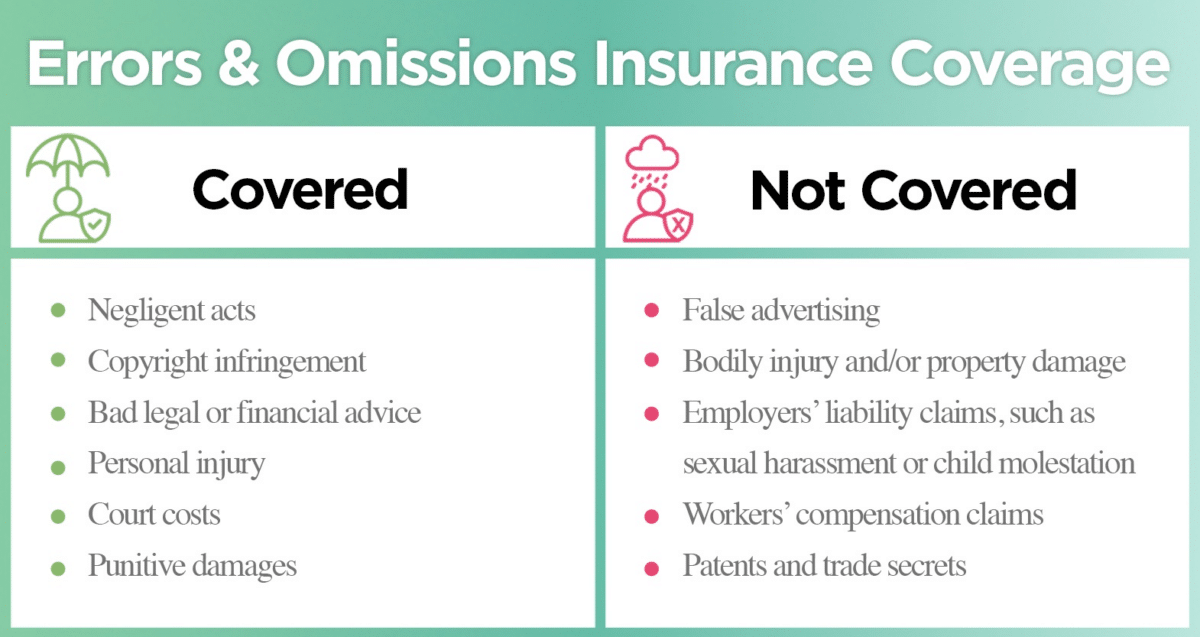
Errors and omissions insurance is like a safety net for professional services. It covers mistakes and negligence claims that could otherwise cost you a fortune. BUT, every policy has its limits.
Typical Coverage in E&O Insurance
In Washington State, an E&O policy usually covers:
- Legal fees and court costs if you’re sued for negligence.
- Financial settlements that may be awarded to the claimant.
- Costs related to defending against allegations of misrepresentation.
Common Exclusions to Watch Out For
Here is the deal: not everything is covered under E&O insurance. You need to know the exclusions:
- Intentional wrongdoing or fraud.
- Property damage or bodily injury (that’s a job for general liability insurance).
- Employment-related claims like harassment or discrimination.
Comparing E&O with Other Liability Insurances
E&O isn’t the only game in town. Let’s see how it stacks up against other insurances:
| Aspect | E&O Insurance | General Liability Insurance |
|---|---|---|
| Coverage Focus | Professional mistakes and negligence | Physical injuries and property damage |
| Typical Claim Example | Errors in a professional service causing financial loss | Customer slips and falls on business premises |
Pro Tip: Always read your policy’s fine print to know exactly what’s covered and what’s not.
Understanding these nuances can be a game-changer for your business. Keep this cheat sheet handy next time you review your insurance policy!
Industry-Specific Considerations
Did you know that the requirements for errors and omissions insurance can vary hugely depending on your industry? If you’re operating in Washington State, it’s crucial to understand how these differences affect your business.
Here’s the deal: Different sectors like real estate, legal, and medical come with their own unique sets of regulations and requirements. Ignoring these can leave you vulnerable to costly lawsuits and financial ruin. Let’s dive into what you need to know.
Specific Requirements for Different Industries
In Washington State, errors and omissions insurance isn’t a one-size-fits-all solution. Each industry has its specific mandates and regulations. For example, in the real estate sector, agents and brokers are often required to carry higher coverage limits due to the significant financial transactions they handle. On the other hand, medical professionals may need tailored policies to cover malpractice risks, which are not a concern for other sectors.
| Industry | Coverage Requirements | Key Regulations |
|---|---|---|
| Real Estate | Higher coverage limits | Protects against transaction errors |
| Legal | Comprehensive policy needed | Covers legal advice and representation errors |
| Medical | Malpractice-focused policy | Includes coverage for patient care mistakes |
Pro Tip: Always consult with an insurance expert who understands your industry to ensure you have the right coverage.
Implications of Not Having Adequate Insurance
If you’re thinking about skimping on errors and omissions insurance, think again. The implications can be catastrophic. Imagine a real estate transaction gone wrong without proper coverage—hello, lawsuits! Or a legal professional giving poor advice without adequate insurance—potential career-ending disaster. For medical professionals, lacking the right policy could mean facing malpractice claims unarmed.
Bottom line, inadequate insurance isn’t just risky; it’s a ticking time bomb for your business. Make sure your coverage matches your industry’s specific needs, or you could be paying the price later.
Cost Factors and Pricing
Did you know that two businesses in the same industry can pay vastly different premiums for Errors and Omissions Insurance in Washington State? Yep, it’s not a one-size-fits-all situation.
The cost of your insurance is influenced by several key factors. Let’s break down the major elements that can sway your premium price.
Business Size and Scale
The size of your business plays a major role in determining your insurance costs. Smaller businesses often have lower premiums simply because they are perceived to have lower risk exposure. But as your business grows, so does your potential risk, and insurers will adjust your premiums accordingly.
Industry Type
Here’s the deal: Not all industries are created equal in the eyes of insurers. Some sectors like financial services and healthcare are considered high-risk. Why? Because they deal with sensitive information and complex regulations. If you’re in a high-risk industry, expect higher premiums.
Claim History Impact
Your claim history is your insurance report card. If you have a track record of frequent claims, insurers will consider you a higher risk. This means higher premiums. BUT if you’ve been claim-free, you’re in luck. You might benefit from lower rates.
Comparative Analysis of Premium Costs
Let’s see how premiums stack up across different professions:
| Profession | Average Annual Premium |
|---|---|
| Consultants | $1,200 |
| Real Estate Agents | $1,500 |
| IT Professionals | $2,000 |
| Healthcare Providers | $2,500 |
Tips to Manage and Lower Insurance Costs
You want to save some bucks on your insurance premiums, right? Here are some steps you can take:
- Shop around and compare quotes from multiple insurers.
- Maintain a clean claims history to qualify for lower premiums.
- Consider increasing your deductible. Yes, it’s more upfront, but it lowers your premium.
- Bundle your E&O insurance with other policies to get a package discount.
Pro Tip: Regularly review your coverage needs to avoid paying for unnecessary extras.
By understanding these factors and taking proactive steps, you can manage your premiums effectively.
Legal Requirements and Compliance
Did you know that not having Errors and Omissions Insurance in Washington State can lead to hefty fines? It’s true!
This type of insurance isn’t just a good idea—it’s often required by law. So let’s dive into what you need to know to stay compliant.
Understanding the Legal Mandates
Washington State has some specific legal mandates when it comes to Errors and Omissions Insurance. If you’re in a professional service industry, you may be legally required to carry this insurance to protect against claims of negligence or mistakes. The state wants to ensure that consumers are safeguarded from potential errors that could cost them money or time.
Compliance Requirements for Businesses
But here’s the deal: It’s not just about having the insurance. You also need to ensure you’re meeting all compliance requirements. This includes keeping your policy up to date and ensuring it meets state regulations. Failure to comply can result in penalties or even license suspension.
How to Stay Compliant with State Laws
Staying compliant isn’t as tough as you might think. The first step is to regularly review your policy with your insurance provider to ensure it meets all current legal requirements. It’s also smart to keep an eye on any changes in state laws that could affect your coverage needs.
Pro Tip: Schedule an annual insurance review. It’s your best defense against accidentally falling out of compliance.
Compliance Checklist
Here’s a quick checklist to help you stay on top of your compliance game:
| Step | Action | Frequency |
|---|---|---|
| 1 | Review your E&O policy with your insurance provider | Annually |
| 2 | Monitor for updates in state insurance laws | Quarterly |
| 3 | Update coverage as needed | As Required |
| 4 | Keep a record of all insurance documentation | Ongoing |
Claims Process and Management
:max_bytes(150000):strip_icc()/EO-Final-35aff6b5f50644aabd242e60da643e80.jpg "Understanding Errors and Omissions Insurance in Washington State - bad ...")
Ever wondered how you’d handle a claim on your errors and omissions insurance? The claims process can feel daunting. But don’t worry, I’ve got you covered.
Filing a claim isn’t just about filling out forms. It’s about understanding the steps, knowing your rights, and managing the process efficiently. And guess what? You’re not alone in this journey.
Steps to Filing a Claim
Filing a claim under an errors and omissions insurance policy involves several key steps. Here’s a streamlined guide to get you through it:
- Step #1: Notify your insurer immediately after recognizing a potential claim. Delay can lead to complications.
- Step #2: Gather all relevant documentation. This includes contracts, correspondences, and any evidence related to the claim.
- Step #3: Complete the claim form provided by your insurer. Accuracy is crucial here.
- Step #4: Submit the claim form along with the supporting documents to your insurance provider.
- Step #5: Follow up regularly with your insurer to track the claim’s progress.
Each of these steps requires attention to detail. But with a little patience and organization, you’ll navigate the process like a pro.
Effective Claims Management Strategies
Handling a claim effectively is an art. It’s not just about paperwork; it’s about strategy:
- Maintain open communication with your insurer. Frequent updates can expedite the process.
- Document every interaction regarding the claim. This creates a paper trail that can be invaluable.
- Seek professional advice if necessary. Sometimes, an expert can provide insights that you might miss.
- Stay organized. Keep all documents in one place for easy access and follow-up.
The right strategy can make a world of difference in how quickly and smoothly your claim is processed.
The Role of Insurance Providers During the Claims Process
Insurance providers are more than just policy issuers. They play a critical role during the claims process.
Here’s how they assist:
- They provide guidance on the necessary documentation and steps to take.
- They evaluate the claim to determine its validity.
- They negotiate settlements and ensure a fair resolution.
- They offer expertise and support every step of the way.
Pro Tip:
Leverage your insurer’s expertise. They are your allies in navigating the claims landscape.
Remember, successful claims management is a partnership between you and your insurer.
Summary
In the ever-evolving landscape of Washington State’s business environment, errors and omissions insurance stands as a pillar of security for professionals who aim to offer their services with peace of mind. By grasping the essentials of this insurance, you’re not just complying with legal requirements, but you’re also fortifying your business against unforeseen challenges. Don’t leave it to chance; ensure your business’s longevity and stability today with the right E&O policy.
FAQ
What is errors and omissions insurance?
Errors and omissions insurance, often referred to as E&O insurance, is a type of liability insurance that protects businesses and professionals against claims of inadequate work or negligent actions.
Why is E&O insurance important in Washington State?
In Washington State, E&O insurance is vital as it shields professionals from lawsuits concerning errors or omissions in their services, thus ensuring business continuity and financial protection.
What does E&O insurance typically cover?
E&O insurance typically covers legal defense costs and settlements for claims of negligence, errors, or omissions in the services provided.
Are there industries where E&O insurance is mandatory in Washington State?
Yes, industries such as real estate, legal, and healthcare often require professionals to carry E&O insurance to comply with state regulations.
How can I lower my E&O insurance premiums?
To lower your E&O insurance premiums, maintain a clean claims history, implement risk management practices, and regularly review your coverage to ensure it fits your current needs.